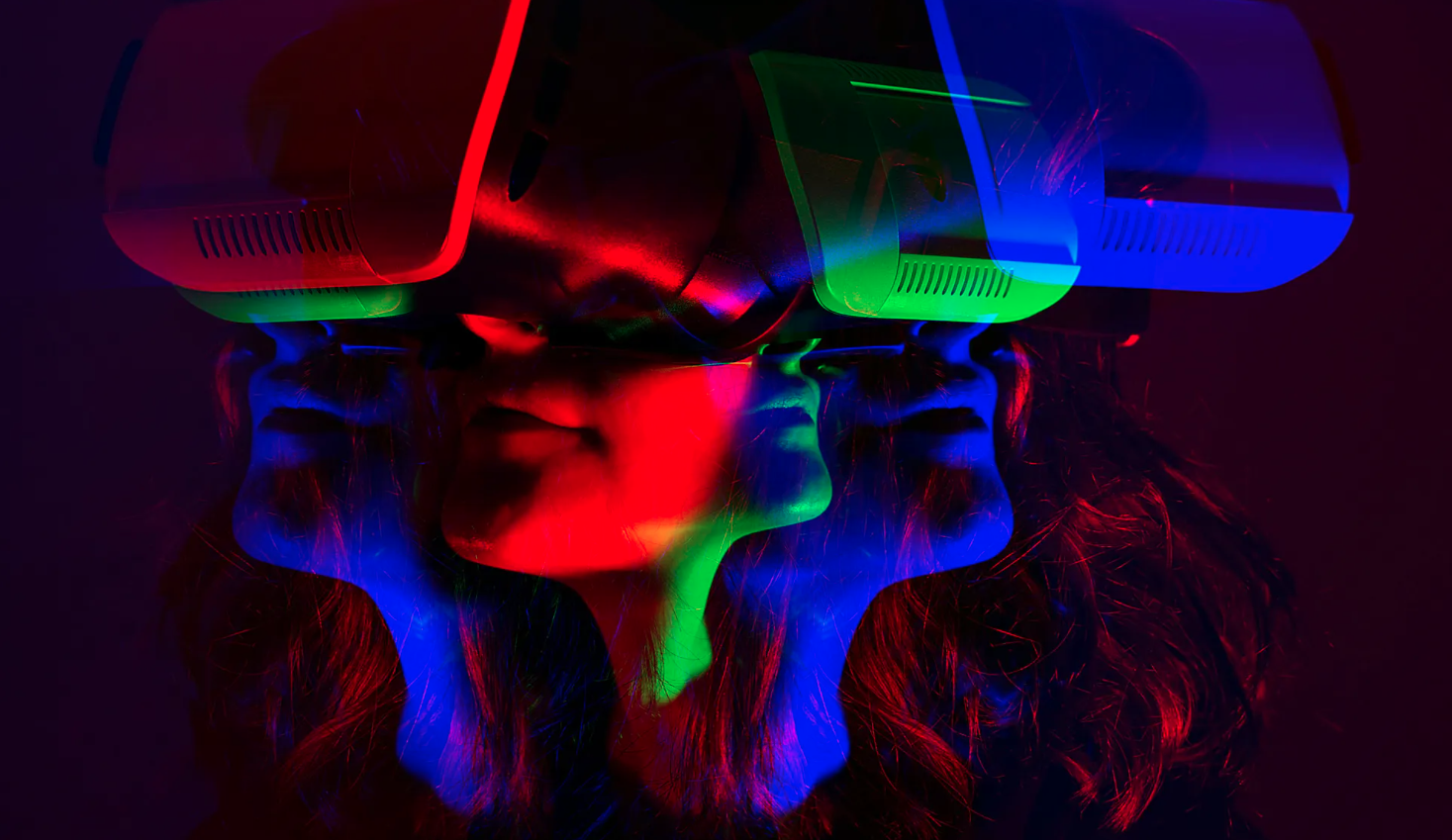
Detailed intro to Metaverse:
TO HEAR TECH CEOs like Mark Zuckerberg or Satya Nadella talk about it, the metaverse is the future of the internet. Or it's a video game. Or maybe it's a deeply uncomfortable, worse version of Zoom? It's hard to say. It's been nearly six months since Facebook announced it was rebranding to Meta and would focus its future on the upcoming “metaverse.” In the time since, what that term means hasn't gotten any clearer. Meta is building a VR social platform, Roblox is facilitating user-generated video games, and some companies are offering up little more than broken game worlds that happen to have NFTs attached.
Advocates from niche startups to tech giants have argued that this lack of coherence is because the metaverse is still being built, and it's too new to define what it means. The internet existed in the 1970s, for example, but not every idea of what that would eventually look like was true.
On the other hand, there's a lot of marketing hype (and money) wrapped up in selling the idea of “the metaverse.” Facebook, in particular, is in an especially vulnerable place after Apple's move to limit ad tracking hit the company's bottom line. It's impossible to separate Facebook's vision of a future in which everyone has a digital wardrobe to swipe through from the fact that Facebook really wants to make money selling virtual clothes. But Facebook isn't the only company that stands to financially benefit from metaverse hype.
So, with all that in mind …
Seriously, What Does “Metaverse” Mean?
To help you get a sense of how vague and complex a term “the metaverse” can be, here's an exercise: Mentally replace the phrase “the metaverse” in a sentence with “cyberspace.” Ninety percent of the time, the meaning won't substantially change. That's because the term doesn't really refer to any one specific type of technology, but rather a broad (and often speculative) shift in how we interact with technology. And it's entirely possible that the term itself will eventually become just as antiquated, even as the specific technology it once described becomes commonplace.Broadly speaking, the technologies companies refer to when they talk about “the metaverse” can include virtual reality—characterized by persistent virtual worlds that continue to exist even when you're not playing—as well as augmented reality that combines aspects of the digital and physical worlds. However, it doesn't require that those spaces be exclusively accessed via VR or AR. Virtual worlds—such as aspects of Fortnite that can be accessed through PCs, game consoles, and even phones—have started referring to themselves as “the metaverse.”
Many companies that have hopped on board the metaverse bandwagon also envision some sort of new digital economy, where users can create, buy, and sell goods. In the more idealistic visions of the metaverse, it's interoperable, allowing you to take virtual items like clothes or cars from one platform to another, though this is harder than it sounds. While some advocates claim new technologies like NFTs can enable portable digital assets, this simply isn't true, and bringing items from one video game or virtual world to another is an enormously complex task that no one company can solve.
TRENDING NOW How Meme Detectives Stop NFT Fraud Get WIRED + a tote SUBSCRIBE NOW Most Popular An illustration of a solar storm in space BACKCHANNEL Here Comes the Sun—to End Civilization MATT RIBEL Internet Explorer icon on computer screen SECURITY The Ghost of Internet Explorer Will Haunt the Web for Years LILY HAY NEWMAN Europcar car rental depot exterior, Lancefield Quay, Glasgow, Scotland, UK BUSINESS Why It’s Impossible to Rent a Car Right Now NICOLE KOBIE Breville Fast Slow Go GEAR We Put a Bunch of Multicookers Under Pressure. These Are the Best JOE RAY It's difficult to parse what all this means because when you hear descriptions like those above, an understandable response is, “Wait, doesn't that exist already?” World of Warcraft, for example, is a persistent virtual world where players can buy and sell goods. Fortnite has virtual experiences like concerts and an exhibit where Rick Sanchez can learn about MLK Jr. You can strap on an Oculus headset and be in your own personal virtual home. Is that really what “the metaverse” means? Just some new kinds of video games?
Well, yes and no. Saying that Fortnite is “the metaverse” would be a bit like saying Google is “the internet.” Even if you spend large chunks of time in Fortnite, socializing, buying things, learning, and playing games, that doesn't necessarily mean it encompasses the entire scope of what people and companies mean when they say "the metaverse." Just as Google, which builds parts of the internet—from physical data centers to security layers—isn't the entire internet.
Tech giants like Microsoft and Meta are working on building tech related to interacting with virtual worlds, but they're not the only ones. Many other large companies, including Nvidia, Unity, Roblox, and even Snap—as well as a variety of smaller companies and startups—are building the infrastructure to create better virtual worlds that more closely mimic our physical life.
For example, Epic has acquired a number of companies that help create or distribute digital assets, in part to bolster its powerful Unreal Engine 5 platform. And while Unreal may be a video game platform, it's also being used in the film industry and could make it easier for anyone to create virtual experiences. There are tangible and exciting developments in the realm of building digital worlds.
Despite this, the idea of a Ready Player One-like single unified place called “the metaverse" is still largely impossible. That is in part because such a world requires companies to cooperate in a way that simply isn't profitable or desirable—Fortnite doesn't have much motivation to give players a portal to jump straight over to World of Warcraft, even if it were easy to do so, for example—and partially because the raw computing power needed for such a concept could be much further away than we think.
This inconvenient fact has given rise to slightly different terminology. Now many companies or advocates instead refer to any single game or platform as “a metaverse.” By this definition, anything from a VR concert app to a video game would count as a “metaverse.” Some take it further, calling the collection of various metaverses a “multiverse of metaverses.” Or maybe we're living in a “hybrid-verse.”
Or these words can mean anything at all. Coca-Cola launched a “flavor born in the metaverse” alongside a Fortnite tie-in mini-game. There are no rules.
Most Popular An illustration of a solar storm in space BACKCHANNEL Here Comes the Sun—to End Civilization MATT RIBEL Internet Explorer icon on computer screen SECURITY The Ghost of Internet Explorer Will Haunt the Web for Years LILY HAY NEWMAN Europcar car rental depot exterior, Lancefield Quay, Glasgow, Scotland, UK BUSINESS Why It’s Impossible to Rent a Car Right Now NICOLE KOBIE Breville Fast Slow Go GEAR We Put a Bunch of Multicookers Under Pressure. These Are the Best JOE RAY It's at this point that most discussions of what the metaverse entails start to stall. We have a vague sense of what things currently exist that we could kind of call the metaverse if we massage the definition of words the right way. And we know which companies are investing in the idea, but after months, there's nothing approaching agreement on what it is. Meta thinks it will include fake houses you can invite all your friends to hang out in. Microsoft seems to think it could involve virtual meeting rooms to train new hires or chat with your remote coworkers.
The pitches for these visions of the future range from optimistic to outright fan fiction. At one point during Meta's original presentation on the metaverse, the company showed a scenario in which a young woman is sitting on her couch scrolling through Instagram when she sees a video a friend posted of a concert that's happening halfway across the world. The video then cuts to the concert, where the woman appears in an Avengers-style hologram. She's able to make eye contact with her friend who is physically there, they're both able to hear the concert, and they can see floating text hovering above the stage. This seems cool, but it's not really advertising a real product, or even a possible future one. In fact, it brings us to the biggest problem with “the metaverse.”
Read complete on here: https://www.wired.com/story/what-is-the-metaverse